
Our Office
Visit Us Online


At Zona Rosa Dental, we believe prevention and early detection are the most reliable ways to protect your smile. Regular oral exams give our team the chance to catch small problems before they become bigger, tailor care to each patient’s needs, and reinforce the daily habits that keep teeth and gums healthy. Our preventive services include comprehensive exams, professional cleanings, oral cancer screenings, and guidance on home care and nutrition — all delivered with attention and respect for each patient.
Your first comprehensive visit sets the stage for personalized care. We begin by reviewing your medical and dental histories so we understand any health conditions, medications, or past treatments that could influence your oral health. This conversation helps us prioritize areas of concern and tailor the examination to your specific needs.
The clinical portion of the exam is a systematic review of your mouth. We assess each tooth, check the gums and supporting bone, and evaluate soft tissues in and around the oral cavity. We also examine your bite and the function of your temporomandibular joints (TMJ), looking for signs of wear, grinding, or other functional issues that can affect long-term dental health.
As part of a complete assessment, we’ll take diagnostic images when they add value to your care plan. These films help us see beyond the surfaces of the teeth to the roots and bone, revealing hidden decay, bone changes, or developing problems. After the exam, we’ll discuss our findings in clear terms and outline sensible next steps — whether that’s enhanced home care, routine monitoring, or a targeted treatment plan.
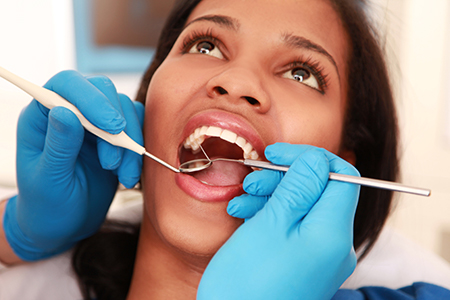
An oral exam often reveals clues about more than just teeth. The mouth is a window into overall health, and changes in the oral tissues can reflect nutritional issues, immune system status, or systemic conditions. During an exam we screen for soft-tissue abnormalities, signs of infection, persistent inflammation, and other indicators that may warrant further evaluation.
There is growing recognition that oral health and overall health are closely linked. Conditions in the mouth can influence — and be influenced by — chronic systemic diseases. For example, persistent gum inflammation is associated with increased risk factors for cardiovascular disease and can complicate blood sugar control in people with diabetes. Noticing these signs early gives patients and clinicians the opportunity to act sooner.
Likewise, symptoms that may seem minor — such as dry mouth, mouth ulcers, or unexplained sores — can sometimes reflect medications, nutritional deficiencies, or other health concerns. When we identify patterns that suggest a broader health issue, we communicate clearly with patients and, when appropriate, recommend coordination with medical providers to ensure comprehensive care.

Daily brushing and flossing form the foundation of oral health, but plaque and tartar can persist in areas that are hard to reach. Professional cleanings remove buildup above and below the gumline and reduce the bacterial load that causes cavities and gum disease. For many patients, routine cleanings are the most effective preventive measure we provide.
Routine checkups allow us to monitor changes over time. Small shifts in gum tissue, the appearance of new stains or spots, or early signs of wear can all be detected and addressed more easily when found early. For children and teens, regular visits also allow us to track jaw and tooth development so any need for orthodontic evaluation can be identified promptly.
Education is a key part of each visit. Our team will review brushing and flossing techniques, recommend products when helpful, and discuss dietary choices that support oral health. Patients who understand the reasons behind preventive actions tend to maintain better habits and enjoy longer-term benefits from their care.
We typically recommend routine visits at intervals that make sense for each patient’s risk profile. For most, twice-yearly appointments provide a good balance of prevention and monitoring, but we tailor that schedule based on individual needs and clinical findings.
Visual inspection is essential, but x-rays reveal what the eye cannot see. Dental radiographs allow us to evaluate tooth roots, supporting bone, developing teeth, and areas between teeth where decay often begins. They’re a vital diagnostic tool that informs accurate treatment planning and confident decision-making.
Advances in digital radiography have made imaging faster, safer, and more accessible. Digital sensors reduce radiation exposure compared with older film techniques, provide immediate images for review, and make it easy to store and compare images over time. These benefits enhance communication and help patients see the issues we’re discussing.
Beyond routine two-dimensional images, three-dimensional cone-beam scans (CBCT) are available when complex anatomy or surgical planning demands a higher level of detail. CBCT can be particularly useful for implant planning, assessing anatomical relationships, and evaluating certain pathology when conventional films are insufficient.
Different types of x-rays serve different diagnostic purposes. Bitewing films are excellent for detecting early decay between teeth and monitoring bone levels near the crowns of posterior teeth. Periapical images show the entire tooth from crown to root, helping identify root problems, abscesses, or developmental issues centered on an individual tooth.
A full-mouth series combines bitewing and periapical views to provide a comprehensive baseline when needed. Panoramic films offer a broad overview of all teeth and jaws, useful for evaluating erupting teeth, impacted third molars, and general jawbone integrity. Cephalometric images are commonly used in orthodontic assessment to appraise skeletal relationships and growth patterns.
When appropriate, three-dimensional CBCT scans deliver volumetric information that supports surgical planning and complex diagnoses. We recommend each imaging type only when it will change how we manage care, keeping exposure as low as reasonably achievable while ensuring you receive the information needed for a safe, effective outcome.
Oral exams are more than a checklist; they are a collaborative process aimed at maintaining function, comfort, and long-term health. After an exam, we summarize key findings in plain language, prioritize any recommended steps, and invite questions so patients can make informed choices. This collaborative model helps patients feel confident and involved in their care.
Prevention is the central theme: early detection, routine maintenance, and clear communication reduce the need for invasive treatment and preserve natural teeth for as long as possible. Our team focuses on practical, evidence-based strategies that fit each patient’s lifestyle and health profile.
Zona Rosa Dental is committed to providing thorough, compassionate exams that respect your time and your goals. If you’d like to learn more about what an oral exam involves or discuss any aspect of your oral health, please contact us for more information.
Yes. We always welcome new patients and their families for care. Feel free to give us a call or reach out to us online to schedule a first visit or for any additional information on our office. We look forward to hearing from you!
Routine dental checkups and professional cleanings help ensure your smile remains in tip-top condition and that any developing problems receive the prompt care they require. While it's a good idea to schedule a checkup and cleaning twice a year, longer or shorter intervals between routine visits depend on your specific needs.
We understand that life gets complicated and busy, and for various reasons, you haven't been able to get to the dentist for care. Don't worry; it's always a good time to get back in touch with the health of your smile.
At Zona Rosa Dental, we offer skilled and compassionate care to address a wide range of dental needs. Whether you need a simple checkup and cleaning, restorations, periodontal treatment, root canal therapy, or the replacement of missing teeth to get your smile back into shape, we provide precise, gentle, stress-free treatment to give you a smile that is as beautiful as it is healthy.
Give us a call today; we're happy to address all your questions and concerns about getting your smile back in tip-top condition.
For pregnant women, practicing good oral care and seeing the dentist to maintain a healthy smile is considered an important component of prenatal care. Researchers have found that pregnancy not only increases the risk of oral health problems, but these problems may also lead to pregnancy complications. At the office of Zona Rosa Dental, we provide the skilled and compassionate care required to help expectant mothers keep their teeth and gums in tip-top condition. While certain procedures are not recommended during pregnancy, we provide the necessary care and take all the necessary precautions required.
Thanks to advances in modern dentistry, teeth that have been affected by a range of imperfections or that have sustained damage from trauma or dental decay can be restored to produce a naturally beautiful looking and functional smile.
As skilled and experienced providers of care, our office can effectively improve and enhance the appearance of teeth that are stained, discolored, misshapen, chipped, fractured, gapped, crowded, or broken down due to dental decay. At the office of Zona Rosa Dental, we offer a comprehensive selection of the leading-edge cosmetic solutions from teeth whitening procedures, dental bonding, tooth-colored fillings, and veneers, to prosthetic solutions and dental implants to rebuild complete and beautiful smiles.
Contact our office to learn more about the many ways we can help you create the smile you've always wanted.
If you're visiting Zona Rosa Dental for the first time, it is helpful that you contact your former dental office and have your records sent over to us. Make note of any problems you may have so that you can discuss them with your dentist.
To provide efficient service, we ask you to please bring your insurance card, an ID, plus any referral slips or diagnostic records given to you by another office. If you are taking medications, please note or make a list of what they are as you will need to provide that information.
Yes! We assure you that both you and your family will be in good hands at the office of Zona Rosa Dental.
We do our best to make sure every patient who steps into our office for care is put at ease. We provide precise and gentle care and our skilled, compassionate team strives to make every visit stress-free. You can rest assured that your smile is in the best of hands and that we are doing all we can to ensure your comfort throughout every procedure. While we always take the time to explain every step in care, feel free to ask us any questions about local anesthesia and methods of dental sedation.
At the office of Zona Rosa Dental, we strive to provide the highest quality of care to address all your dental needs. Once we've had the opportunity to examine your smile, we can give you a clear picture of any dental issues that are present, along with a quote for what the cost of treatment will be. The cost of care all depends upon the extent and complexity of issues affecting the health or appearance of your smile and the types of procedures that are required. Our goal is to make dental care more affordable so that you can begin treatment without any additional stress or delay.
Keep in mind that with routine dental checkups and periodic care, we can help prevent dental disease while treating emerging problems early in their onset to avoid larger issues and more expensive care down the road.
Routine dental checkups and preventive care procedures may be covered under your dental insurance plan requiring little to no out-of-pocket expense. We invite you to check our financial information page or give us a call to find out if our office participates with your plan, and if you have any other questions about dental insurance, dental savings plans, forms of payment, or financing options. We welcome your inquiries and do our best to help you begin care without additional stress or delay.
If you've lost a tooth due to injury, decay, gum disease, or any other reason, we recommend dental implants to replace missing teeth. Dental implants come the closest to replicating the look, feel, and function of your natural teeth.
Absolutely! Both flossing and brushing regularly are equally important to maintain your oral health. While brushing cleans the surface of your teeth, flossing cleans in between them. Flossing is important to prevent plaque buildup, which can cause gums to recede and lead to periodontal disease.
Even if you have dentures, it is still necessary to see a dentist! Dental checkups help ensure that your dentures are comfortable, fitting properly, and that there are no other problems. Beyond assessing your dentures, our dentist will also perform a thorough examination of the jawbone, and surrounding soft tissues both inside the mouth, the face, and neck, to confirm that you remain in good oral health.
Emergency dental care is a service we hope you'll never need- but if you do, the office of Zona Rosa Dental is here for you!
Whether you're suffering from a chipped tooth, toothache, or any problem affecting your oral health, you can be sure to get the prompt attention and compassionate care you require at our office. Patient care and comfort are our top priorities, and we offer a comprehensive range of the most advanced services to address a broad spectrum of dental needs.
While the pain of a toothache is one of the more common reasons that patients come to our office for emergency dental care, we also promptly treat emergencies that are not necessarily painful like crowns that have been dislodged and broken dentures that leave embarrassing gaps in one's smile.
You can rest assured that your oral health is in the best of hands at our office. We'll quickly determine exactly what's wrong, explain your treatment options, and then provide the precise and gentle care you require to alleviate your discomfort and get you back on the path to oral health and wellness.
Your health and comfort are our top priorities. If your dental emergency is painful, if it affects the appearance of your smile, or if you suspect that an infection is present, our office will make every effort to see you as soon as possible for care.
At the office of Zona Rosa Dental, we welcome patients of all ages for care and offer a comprehensive range of services designed to help every member of your family maintain a beautiful and healthy smile. Whether you or a loved one needs a routine checkup and cleaning, fillings, same-day crowns, a cosmetic smile makeover, the replacement of missing teeth or require the services of a skilled and compassionate emergency dentist, you can rely on our office for the highest quality care.
For more information on our office and the many services we provide, or to schedule an appointment for care, give us a call today.
Your first oral exam begins with a review of your medical and dental history so clinicians understand health conditions, medications, and past treatments that could affect your care. The clinical exam includes a systematic inspection of each tooth, an evaluation of the gums and supporting bone, and an assessment of soft tissues inside and around the mouth. We also check bite, jaw function, and the temporomandibular joints to identify wear patterns or signs of functional issues.
Diagnostic images are taken when they add value to the evaluation and help reveal decay, bone changes, or other problems below the surface. After the exam the team explains findings in plain language and outlines recommended next steps so you can make informed choices. At Zona Rosa Dental we focus on creating a personalized plan that balances preventive measures, monitoring, and any necessary treatment.
Routine intervals are individualized, but many patients benefit from checkups every six months to balance prevention and monitoring of change over time. The right schedule depends on your risk profile, which includes history of cavities, gum disease, medical conditions, medication use, and habits such as smoking or clenching. For patients with higher risk we may recommend more frequent visits to manage disease activity and prevent progression.
Conversely, people with low risk and stable oral health may be seen less frequently if clinical findings support that approach. Your dentist will discuss the reasons for the interval and adjust the plan as your health or circumstances change. Regular visits provide continuity, allowing small changes to be detected and managed early.
X-rays reveal structures the eye cannot see, such as tooth roots, supporting bone, and the spaces between teeth where decay often begins. Bitewing and periapical images are used to detect early interproximal decay, root problems, or bone level changes that influence diagnosis and treatment planning. Imaging provides baseline information that helps monitor development and compare changes over time.
Digital radiography has made imaging faster and more efficient while minimizing radiation exposure, and three-dimensional cone-beam scans are reserved for complex cases that demand volumetric detail. We recommend each imaging type only when it will affect care, following the principle of keeping exposure as low as reasonably achievable. Clear images support accurate diagnoses and help patients understand clinical findings.
The mouth can reflect systemic health because changes in oral tissues sometimes mirror nutritional deficiencies, immune responses, or chronic conditions. Persistent gum inflammation is linked with systemic risk factors and can complicate control of conditions such as diabetes, so identifying and treating periodontal disease supports whole‑body health. Oral exams also detect signs of infection, lesions, or medication-related changes that may warrant medical evaluation.
When the exam uncovers patterns suggestive of a broader health issue, the dental team communicates findings clearly and recommends coordination with medical providers as appropriate. This collaborative approach helps ensure both oral and general health needs are addressed. Timely detection and referral improve the chances of effective management for related conditions.
Bring a current list of medications and any relevant medical records so the team can review interactions and conditions that affect dental care. If you have recent dental records or radiographs from another office, bringing them or authorizing their transfer can streamline diagnosis and reduce duplicate imaging. It is also helpful to prepare a list of concerns or symptoms you want to discuss during the visit.
Arrive with details about your oral hygiene routine and the products you use, as this information helps the clinician provide targeted home‑care recommendations. If you have allergies or recent medical changes, be sure to mention them at check‑in. Clear communication and documentation at the first visit set the foundation for safe, personalized care.
Oral cancer screening is a routine part of a comprehensive exam and involves a visual and tactile inspection of the lips, tongue, floor and roof of the mouth, cheeks, gums, and the back of the throat. Clinicians look for persistent sores, red or white patches, lumps, or anything that feels abnormal compared with surrounding tissue. Palpation of the neck and lymph nodes is also performed to check for enlargement or firmness that may indicate a deeper problem.
When visual or tactile findings are suspicious, adjunctive tools or targeted imaging may be used and a referral to an oral medicine or ENT specialist may be recommended for biopsy or further evaluation. Early detection significantly improves treatment options and outcomes, so routine screening is an important preventive measure. Patients are encouraged to report any persistent oral changes between visits.
Professional cleanings remove plaque and hardened tartar above and below the gumline in areas that are difficult to reach with routine home care, reducing the bacterial load that contributes to cavities and periodontal disease. Scaling and polishing help restore smooth tooth surfaces and allow the gums to heal when inflammation is present. For many patients, regular prophylaxis is the single most effective preventive procedure we offer.
During the cleaning visit the team assesses gum health, measures pocket depths when needed, and provides individualized instruction on brushing and flossing techniques. Product recommendations and dietary guidance are offered to support long‑term maintenance. Cleanings also create an opportunity to monitor changes and reinforce habits that preserve natural teeth.
Yes. Pediatric exams emphasize growth and development, monitoring tooth eruption, jaw relationships, and early signs that could indicate the need for orthodontic evaluation. Clinicians assess habits such as thumb sucking, monitor space for permanent teeth, and recommend preventive measures like sealants or fluoride when appropriate. The approach is age‑appropriate, focusing on building positive experiences and teaching effective home care.
Adult exams place more emphasis on restorative needs, periodontal health, wear patterns from grinding, and the cumulative effects of past dental work. Screenings for systemic links and medication effects become increasingly relevant with age, and care plans are tailored to preserve function and comfort. In all cases the goal is to match preventive and treatment strategies to the patient’s developmental stage and risk profile.
Evaluation of the temporomandibular joint (TMJ) and occlusion includes observation of jaw movement, listening and feeling for joint sounds, and checking for tenderness, reduced range of motion, or deviations when opening and closing. The clinician inspects the teeth for abnormal wear, fractures, or restorations that affect how the bite functions. Functional testing helps identify bruxism, clenching, or other behaviors contributing to jaw pain and tooth damage.
When dysfunction is detected, conservative management like bite guards, behavior modification, or targeted physical therapy may be recommended as first‑line options. More involved interventions are considered only after a thorough assessment and when conservative care does not provide sufficient relief. Referrals to specialists are made when diagnostic complexity or surgical considerations arise.
After the clinical evaluation the dentist summarizes key findings in clear, patient‑friendly language and prioritizes recommended actions so you understand what matters most for short‑ and long‑term oral health. Recommendations may include improved home care techniques, scheduling a preventive cleaning, monitoring a finding, or developing a treatment plan for specific concerns. Patients receive an opportunity to ask questions and discuss options before decisions are made.
The team provides written summaries or treatment outlines when helpful and coordinates follow‑up appointments to ensure continuity of care. If a finding suggests a broader health issue or specialist care, the dental team recommends appropriate referrals and communicates with other providers as needed. This transparent, collaborative approach helps patients stay informed and actively involved in their oral health journey at Zona Rosa Dental.
Email: